


Athens Excursions » Piraeus
More about Athens & Attica
AthensAncient Athens
Ancient Agora
Museums
Walks in Athens
Plaka
Syntagma area
Lycabettus
Entertainment
Nightlife
Shopping
Excursions
Athenian Riviera
Mount Parnitha
Kaisariani Monastery
Daphni Monastery
Marathon
Piraeus
Porto Germeno (Aegosthena)
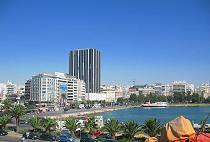
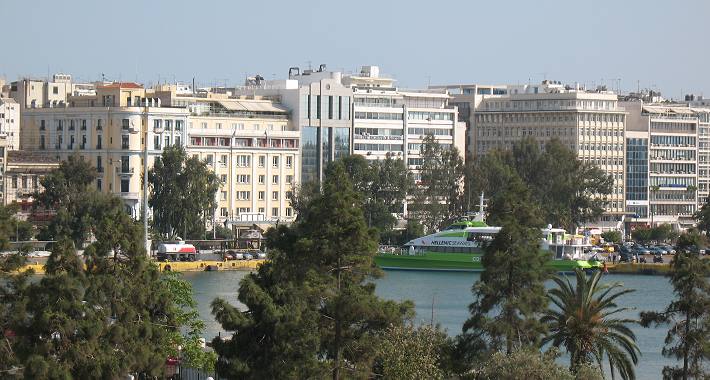
Piraeus - Due to the rapid development of the area between them, Athens and Piraeus have really become one big city, the boundaries between them being more of an administrative nature rather than real ones. The city of Piraeus, planned by the architect Ippodamos from Melos, was built in the middle of the 5th century BC. Ippodamos' plans were used as guidelines for replanning the city in 1834.
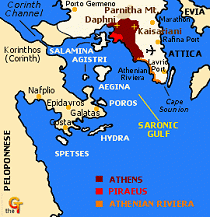
Porto Leone - Piraeus was known in medieval times as Porto Leone, a name due to the enormous stone lion which guarded the port's entrance. Piraeus is the main port of Athens, the biggest in Greece and one of the most important in the Mediterranean Sea. Today, the life of Piraeus is centered around its three ports: the main, central one and those of Zea and Mikrolimano. Piraeus is the most important shipping, industrial and transport centre of the country. You can walk around the central harbour, shared by cargo and passenger ships alike, and watch the constant comings and goings of goods and people from around the world. Then, continue your walk to Kasteffa, a hill full of beautiful houses, with a great view of the Saronic Gulf and visit the city's archaeological Museum. In Mikrofimano you can treat yourselves to an ouzo accompanied by seafood mezedes, in one of its many tavernas and restaurants. People from allover Attica come here for a meal of fresh fish. In the afternoon, a stroll around the yachts and sailing boats moored in the marina Zeas, can prove to be very beneficial to the weary traveller. If the night finds you in the area, you can try one of the many bars found nearby. The pace of life in Piraeus is set by the sea, which seems to encompass the whole city. Actually it once did, as Piraeus was an island in ancient times. Travellers were then ferried from the mainland to the island (the verb in Greek being: die-perae- ounto) and this is probably how its name came to be Piraeus.
The History of Piraeus - Themistokles was the first to realise the importance of Piraeus to the city of Athens and turn it into the city's main port, instead of the Gulf of Faliro, which was used by the Athenians until the 5th century B.C. Wanting Athens to have a fortified port he built the wall of Piraeus, the construction of which took from 493 to 479 B.C. Later Perikles completed the fortification by building the Makra Teiche (the Long Walls), which protected both sides of the road all the way from Piraeus to Athens.
The Keys to Piraeus -
The main Harbour -
Its ancient name was Kantharos
and nowadays it is the centre of
the city's life. This is where you
will get a ferry to all of the Aegean
islands (with the exception of the
ones belonging to the Sporades)
and Crete.
Zea -
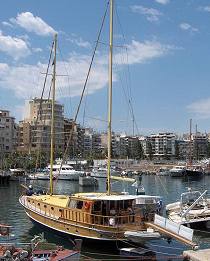
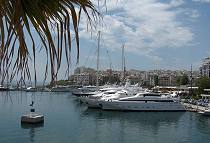
Zea's marina is the place where
some of the most impressive yachts
and cruises in Greece are moored.
The coastline is full of restaurants,
tavernas, bars and shops catering
for the needs of yachtsmen.
Mikrolimano -
This port, once potected by the
goddess Mounichia AJtemis is today
a popular hang-out for tourists, It is
a lovely little harbour full of fishing
boats, small vessels and some very
beautiful yachts. If you like fish and
seafood, try one of its famous
tavernas.
Kastella -
Built on a hill which is also known
as Prophetis Elias, Kastella is
Piraeus' most fashionable
neighbourhood. If you walk towards
the top of the hill you will find
yourselves in narrow streets
surrounded by picturesque houses.
The view of the central harbour,
lea and Mirkolimano, from here
is unique.
The Municipal Theatre (Dimotiko Theatro) -
It dominates one of the city's
central squares. It was built in
the 1880s. Korai Square in front
of it, is one of the spots most
frequented by the residents
of Piraeus and is their favourite
meeting place.
The Monastiraki of Piraeus -
A flea market like the Athenian
one of Monastiraki. One can find
real bragins here. It takes place
every Sunday close to Ippodamias Square.
The Archaeological Museum -
The Piraeus Museum contains
objects, mainly sculptures,
discovered in Piraeus and the
area of the Attic coast. The
exhibits are representative
of the history, the acme and
decline of the ancient city. Pay
particular attention to the five
bronze statues discovered in
Piraeus in 1959: The Archaic
Kouros-Apollo, two statues of
Artemis, the Piraeus Athena and
a tragic mask (4th century BC).
The Maritime Museum -
You will find it onAktiMoustopoulou
and its exhibits cover 3,000 years or
so of Greek naval history.
Getting there - From Syntagma Square or Omonia Square by metro.
More about Athens & Attica
Walks in Athens » Plaka • Syntagma area • Lycabettus
Entertainment » Nightlife • Shopping
Excursions » Athenian Riviera • Mount Parnitha • Kaisariani Monastery • Daphni Monastery • Marathon • Piraeus • Porto Germeno (Aegosthena)

The travel guide to Greece


Contact: contact@thegreektravel.com Last update 26 April 2019